5) Poe Powerhouse to Oroville Reservoir
Linked via: Proximity 98% confidence Synced 6mo ago
Gauge Conditions
Runnable: ? – ? CFS
Approximate reading: This gauge is 14.4 miles away on Feather. Use as a general reference only.
Data from American Whitewater & USGS
CDEC Flow Data California
Data from California Data Exchange Center (CDEC)
Run Map
Run Time Estimate
Select put-in and take-out to estimate time.
Unlock Advanced Trip Planning
See wind-adjusted speed maps, forecast planning, and detailed time estimates.
Sign in to generate an AI timing estimate for this run.
Whitewater timing varies with scouting, portages, and group pace. Use as a planning baseline.
Description
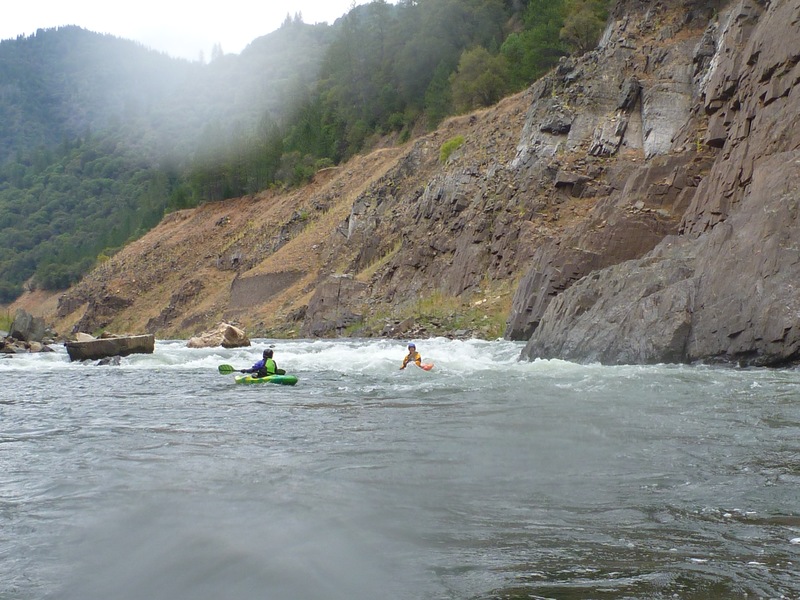
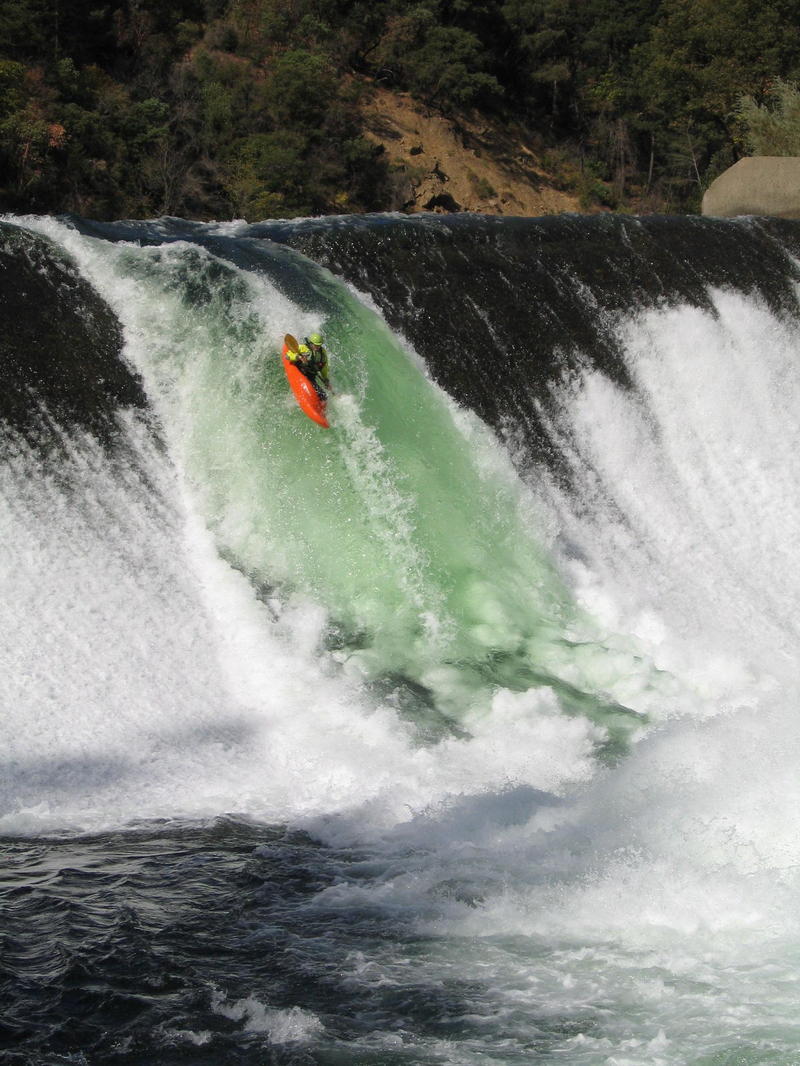
Big Bend is the last run on the North Fork Feather before the river settles into Oroville Reservoir, formed behind the nation's highest dam. The run includes a dramatic drop over Big Bend Dam.
The run was first pioneered by Albert Romvari during an extreme drought around 1980 when Oroville Reservoir was at a low elevation and nothing else was flowing. Albert learned of a planned release from Poe Powerhouse of about 3000 cfs and assembled a crew to explore this section of the North Fork Feather that is normally buried under the flatwater of the reservoir.
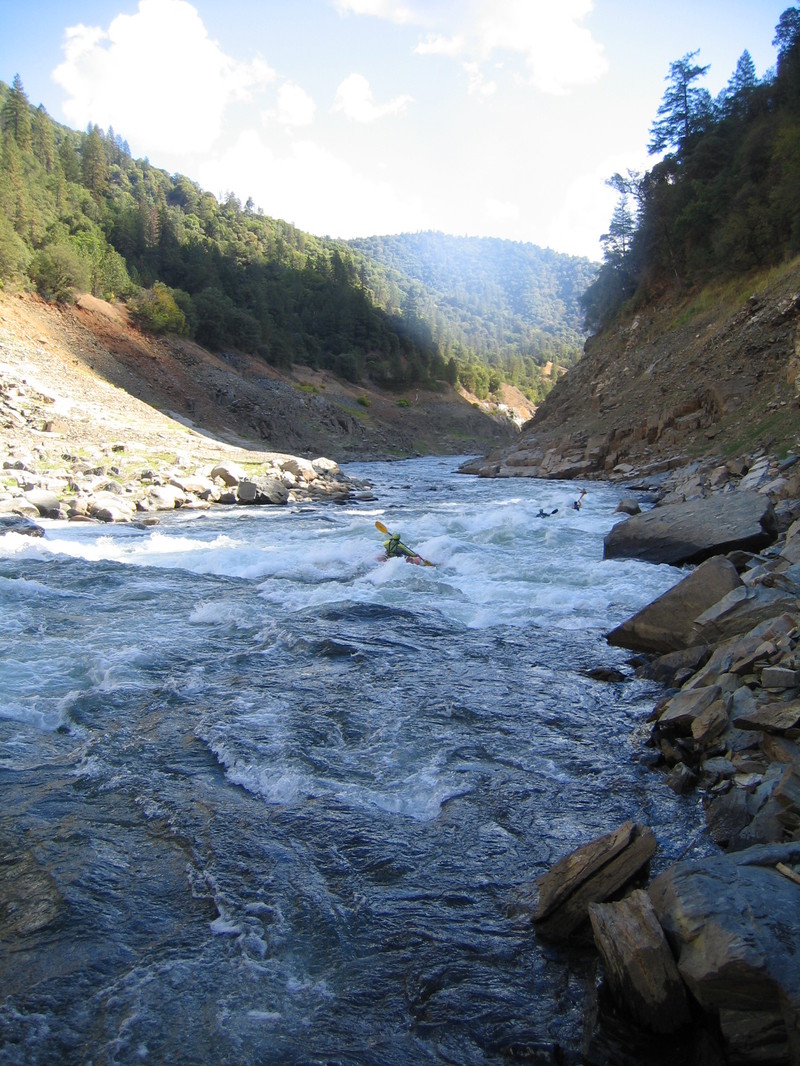
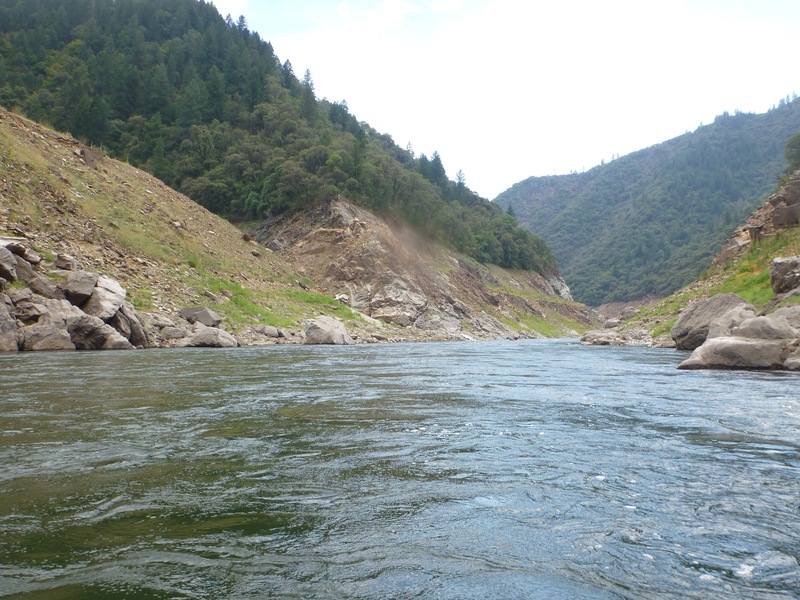
The good news on this run is that flows from the Poe Powerhouse feed this run almost every day of the year. The bad news is that the run is short to nonexistent in most years. This is because when Oroville Reservoir is at full pool, a reservoir elevation of 900 feet, it backs up all the way to the Poe Powerhouse. In fact, this run is generally not considered to be viable until Lake Oroville elevation drops below 750 feet. This run is at its best in the driest years. In the late summer and fall of dry years Big Bend often has flows of 3000 cfs!
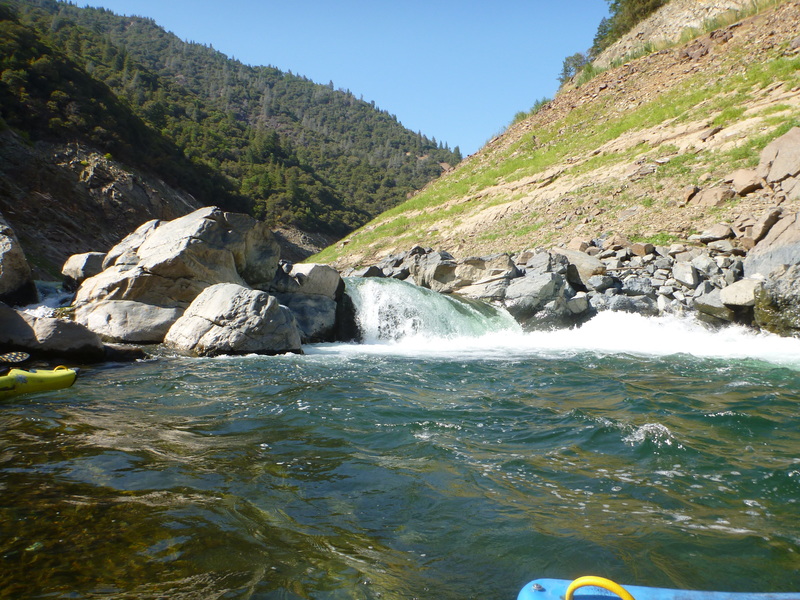
The run starts at the Poe Powerhouse and after padding for about five minutes across the Poe Afterbay, you come to the Big Bend Dam. The interesting thing about the Big Bend run is that you pass by, and over, layers of human development as you descend down into the Oroville Reservoir. First off, you chuck yourself off of the Big Bend Dam, built in 1911, the dam and powerhouse was the first project in what would become the Stairway of Power. Eventually, this dam and the powerhouse downstream was abandoned by PG&E when Oroville Dam was built.
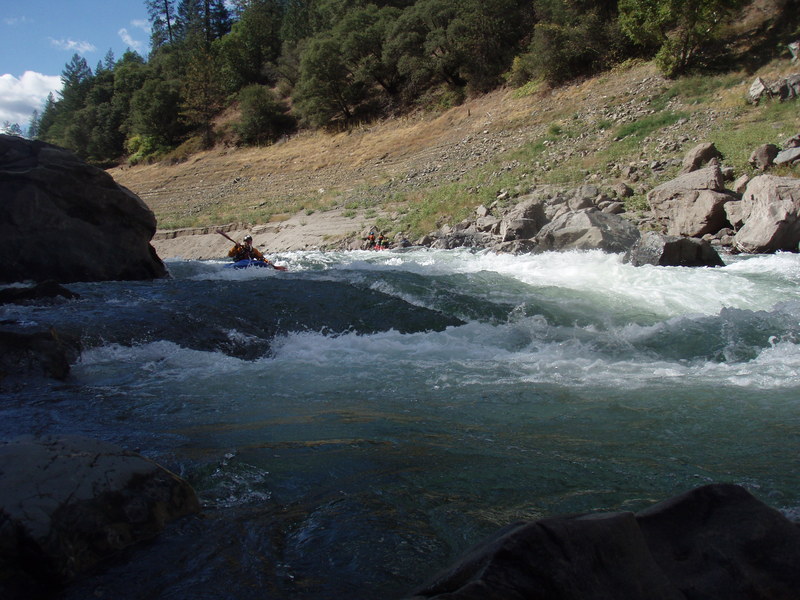
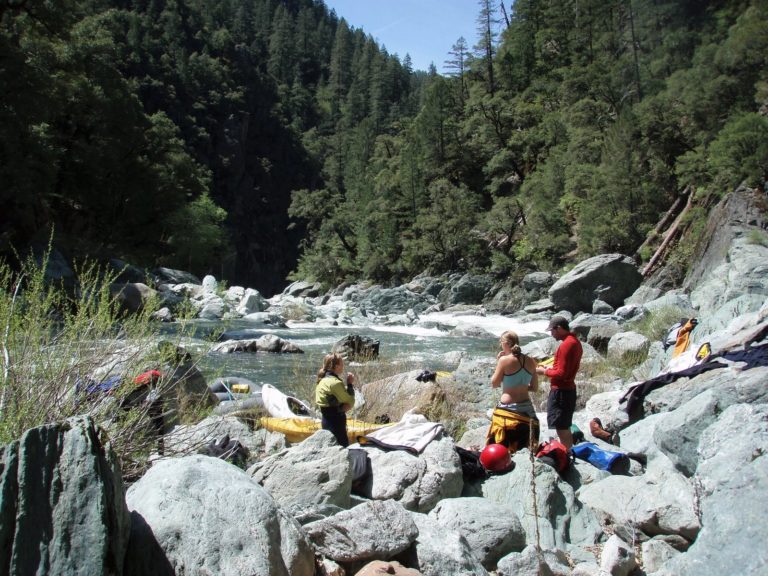
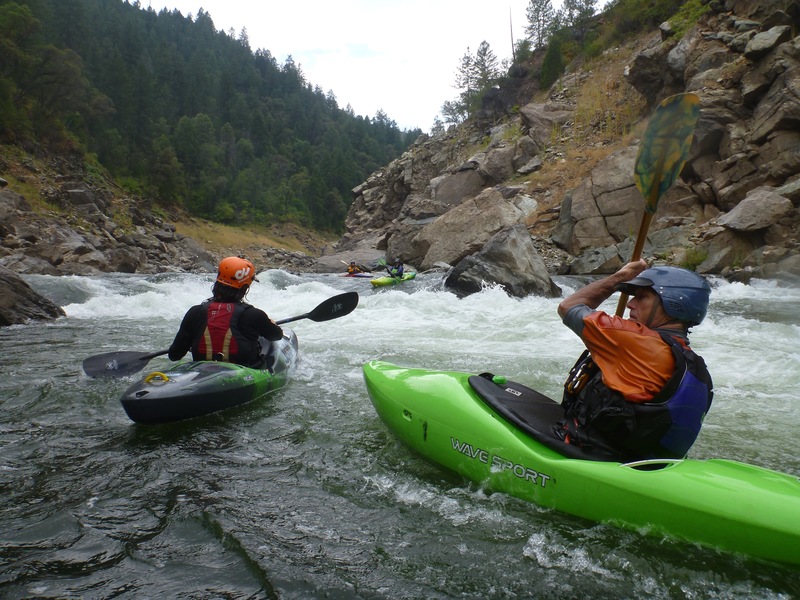
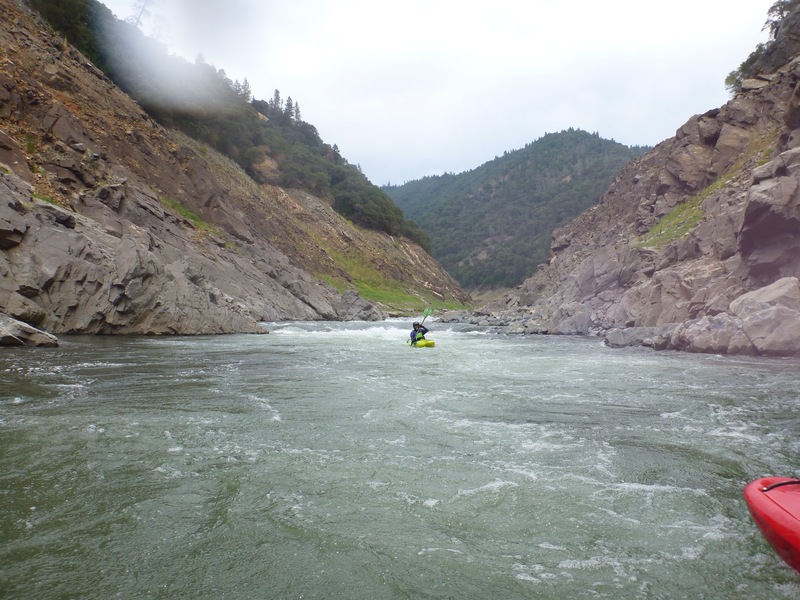
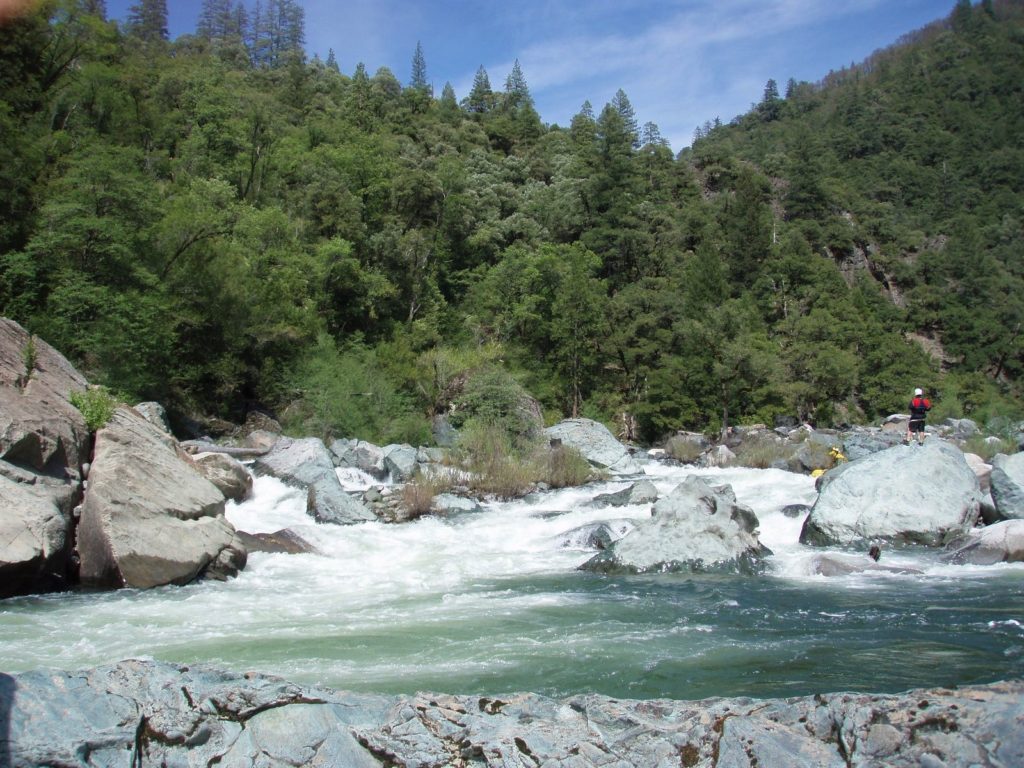
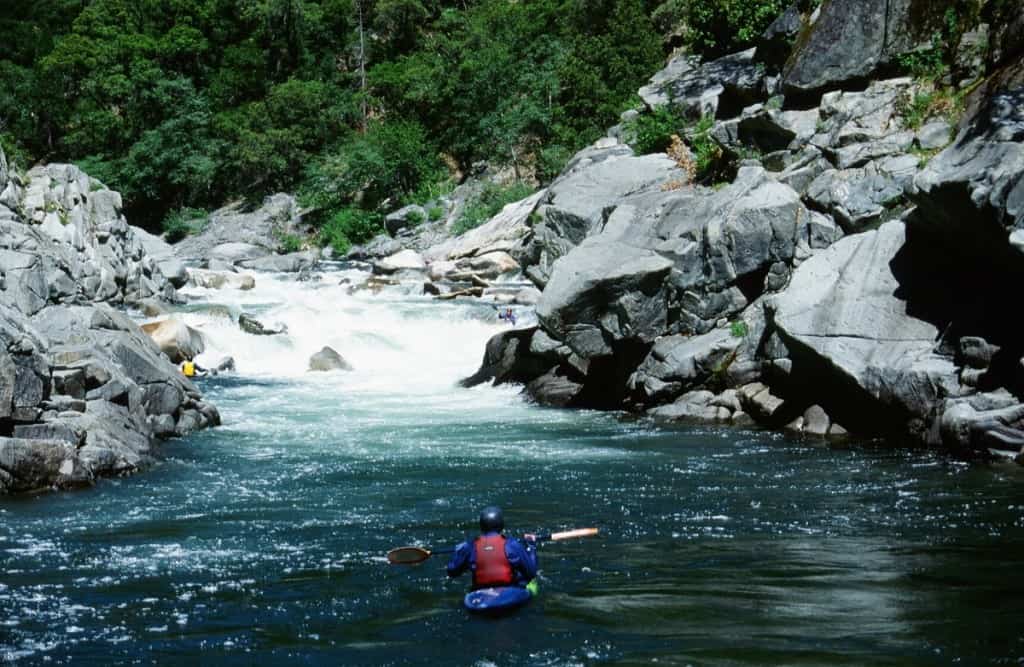
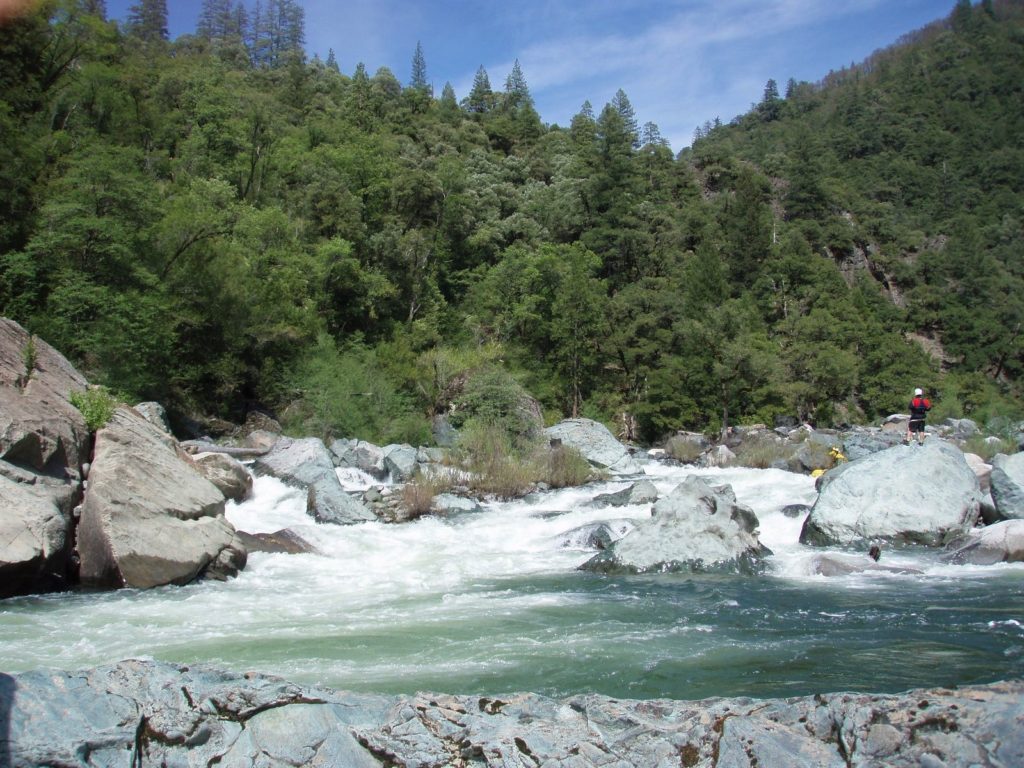
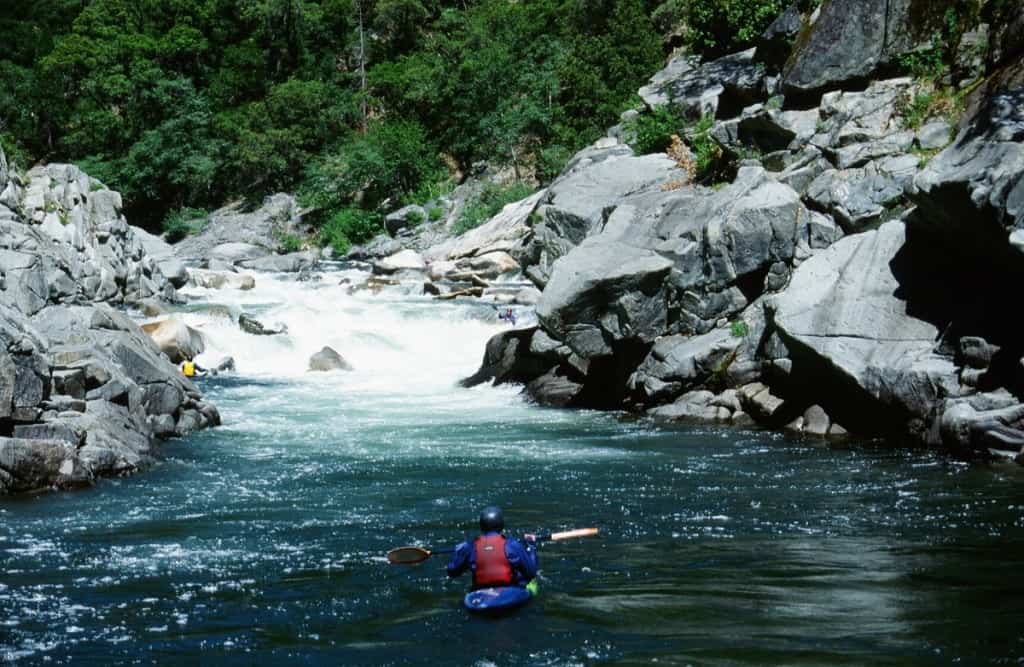
Saying that this run starts off with a bang would be a gross understatement. It has been said that running Big Bend Dam is like running a 40 foot water fall, without having to run a 40 foot waterfall. Initially Big Bend Dam was portaged but then Reg Lake made the first descent sliding down the side off the main chute. Steve Rock later followed with the first descent of the main chute that is the standard run today.There are also a number of fun class 3 to 3+ drops and, as of 2014, several new drops have started to appear when the lake is at an elevation level of 700 feet or less. As you continue down the canyon, remnants of the Great Western railroad begin to appear. Tunnels, retaining walls, all flooded by Oroville Dam. Gold Rush era mining trails also become visible. Best of all is that there is still an amazing river down in the canyon. It is an incredible irony that it takes a drought to bring this river back to life.
Once you reach Oroville Reservoir it's a two or 3 hour paddle out on your own power. Since 2008 however, a shuttle service is available to Lime Saddle Marina. American Whitewater signed a Settlement Agreement for the Oroville Hydroelectric Project that included provisions for this boating shuttle service.
The terms of the service are:
• Available during business hours only.
• First 3 hrs. portal to portal $280.00 flat rate
• After 3 hrs. $75.00 per hour
• Maximum 8 people, no minimum.
• Price remains the same from 1-8 people.
• Reservations only; payment made in advance.
For Reservations call Lime Saddle Marina at 530-877-2883
Terms of this service were negotiated between State Parks and the Marina concessionaire.
Other Information Sources:
Lake Oroville State Park Visitor Center phone - 530-538-2219
A Wet State has a nice write up and photos of Big Bend Dam.
Kayaking video showing Big Bend dam and one other rapid.


Rapids in this Run (12)
Waterfalls (1)
Difficulty
Class III+(IV)
Length
12.0 mi
Gradient
32 ft/mi
max 75
Rapids
12
Access Points
Shuttle Info


**Put in:**
Take **CA-70 East from Oroville**
Turn **left** at **Big Bend Rd**
187 ft
Turn **left** to stay on **Big Bend Rd**
0.5 mi
Turn **left** to stay on **Big Bend Rd**
0.5 mi
Turn **left** at **Bardees Bar Rd and follow**
**this road to the Poe Powerhouse**
0.3 mi
5 mi
Poe powerhouse elevation is about 900 feet.
**Take out:** Once the river meets the reservoir you have a few of hours of flat water paddling before you can get to road access. At mile 11 from the put-in, you reach a large arm of the lake going off to the right (north). This is the West Branch arm. Paddle into this arm.
The usual option is to keep paddling to the right, into the Dark Canyon arm. The Dark Canyon boat launch is about a mile up this arm. This access can be gated but is supposed to be open on weekends. Call the State Park to make sure the gate is left open for you. If the gate is locked the walk from the reservoir to the gate is said to be between a half mile and one mile.
If you use the boat shuttle service from [Lime Saddle Marina](http://www.members.tripod.com/LIMESADDLEMARINA/index.htm) then you will probably just park at that marina. Call **Lime Saddle Marina at 530-877-2883** reservations and details.
Difficulty Classes
I Easy
II Novice
III Intermediate
IV Advanced
V Expert/Extreme
VI Unrunnable
Current Conditions
5-Day Forecast
Whitewater data from
American Whitewater
American Whitewater