Gauge Conditions
Description
Freight Train changed significantly in late December 2024 and most boaters will probably now choose to portage unless flows are high enough to cover up the rocks through the crux of the rapid. There is no clean line through for rafts or larger boats when the rocks are exposed. Be sure to scout from river level; road scouting does not convey the vertical scale, current speed, and congestion of the rocks, making it look less menacing than it really is. It is now something greater than a standard Class V rapid.
Since the changes are new, boaters are still figuring out the situation. At medium flows (~2,500 cfs and up) there is a sneak route on the far right for kayaks only, but not making the sneak could be disastrous. At flows above about 3,500 cfs, the problematic new rocks are covered enough to consider a line in much in the place where it used to be. Quite likely, at flows of 1,200 cfs or less, the technical slot line along the river left cliff wall will still be viable for kayakers.
The description below is for the Freight Train before late December 2024. Although much of the description is still accurate, the rapid is so fundamentally changed by the problematic new rocks in its crux zone that there's little value to understanding the details of how Freight Train used to be. Scout and make your own decisions now, and know that most boaters will going down the river right banks as they portage. You still get to run the Angel Wings at the bottom.
DESCRIPTION OF FREIGHT TRAIN AS IT EXISTED BEFORE DECEMBER 2024
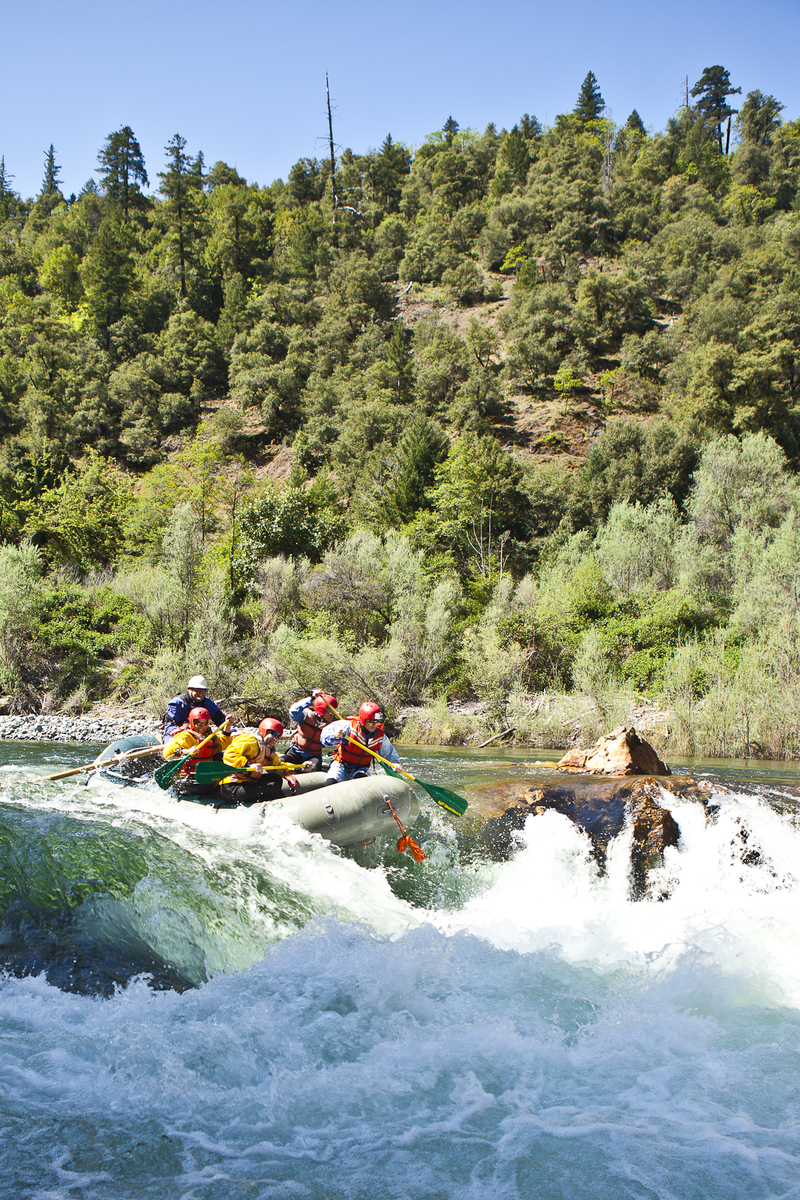
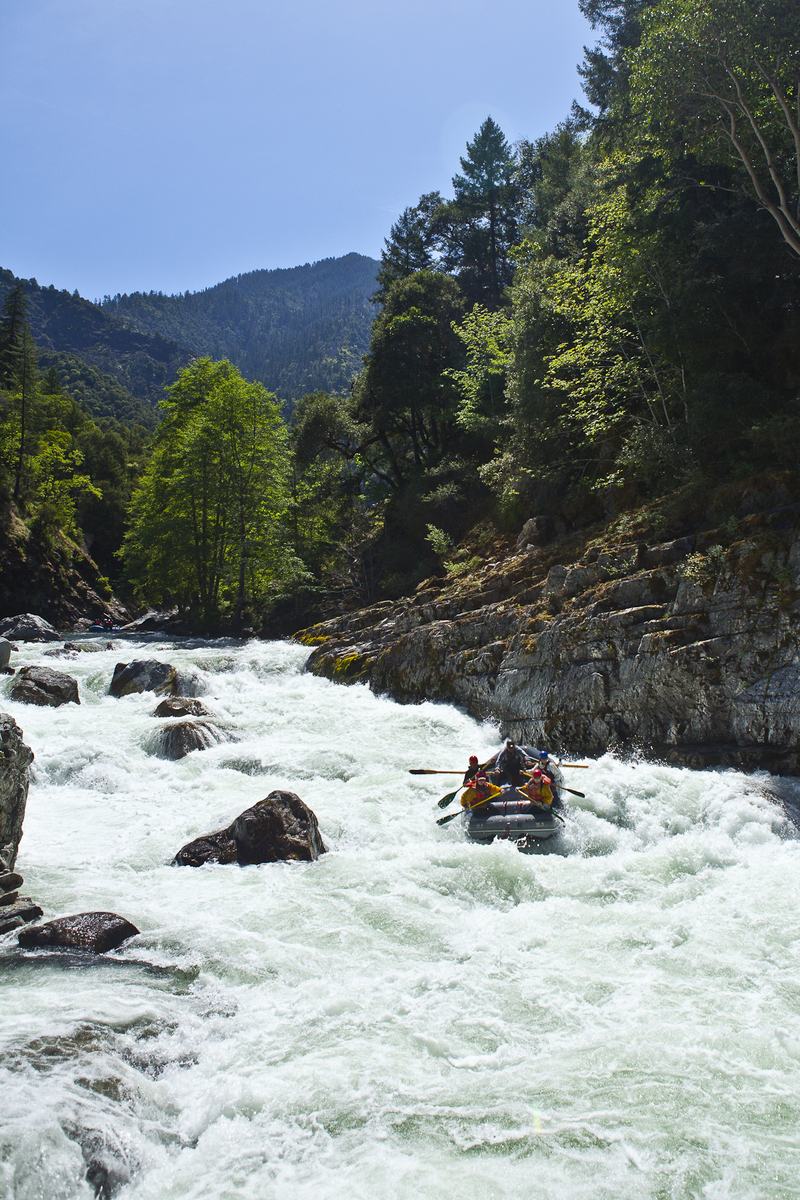
Freight Train is the largest and most powerful rapid on the Salmon River, dropping a total of approximately 25 feet from top to bottom through a challenging course of rocks and large holes. Locals call it Grants Bluff.
The rapid is easier and safer at flows above 2,500 cfs when lines open up and some of the rocks become covered. At flows below 2,000 cfs, the lines in the middle and bottom of the rapid are tight, the water is fast and powerful, and the river is not deep. Rafting outfitters generally stop running Freight Train at flows below 1,200 cfs. Numerous head hits and head injuries have occurred at low flows, mostly among kayakers. A low water line on far left opens up for the bottom 1/3 of the main rapid for kayakers when flows are about 1,200 cfs or lower. Not all the hazards are amplified at low water: there was a flush drowning here at high water in the 1980s.
At medium and high flows, the rapid is fast and powerful. The topography of the large waves make downstream visibility difficult so know where you want to go, drive by feel, and enjoy the wild ride. Expect to take a hit at the big, breaking curler known as Hawaii 5-0 or the Bomb Shelter. A slight left angle will help you shoot out of this in the direction you want to be going and avoid the rocks and hole that lurk straight below.
Scout and portage on the right. You can also road scout this rapid from the pullout on Salmon River Road near the 8-mile marker, although you can't see the top 1/3 of the rapid and the vertical scale of the drop absolutely cannot be appreciated from above.
Location
Other Rapids on This Run (20)
 Rapid
IV
Rapid
IV
 Waterfall
V
Waterfall
V
Current Conditions
5-Day Forecast
American Whitewater