Gauge Conditions
Optimal flow range (flows based on 2014 Colorado Basin Flow Study).
Photo
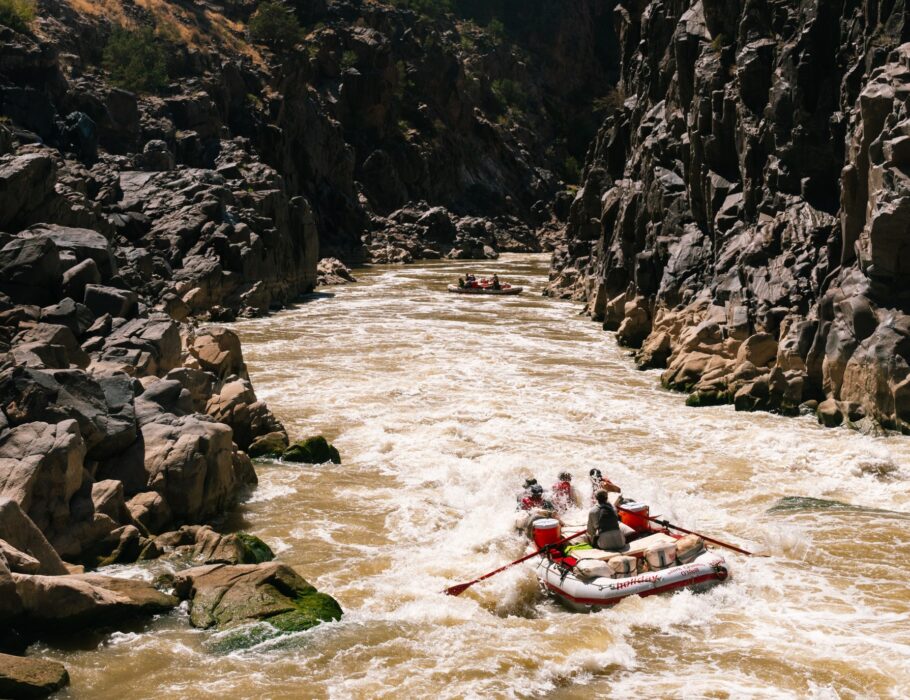
Description
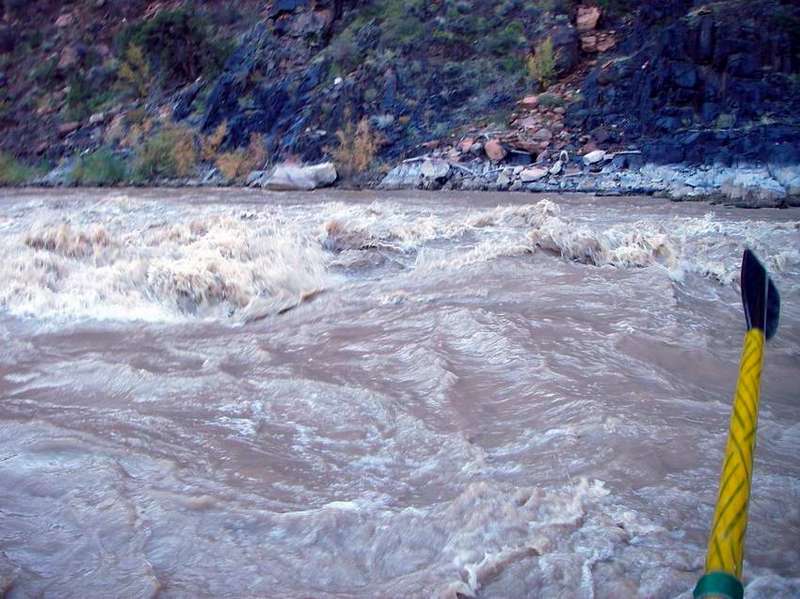
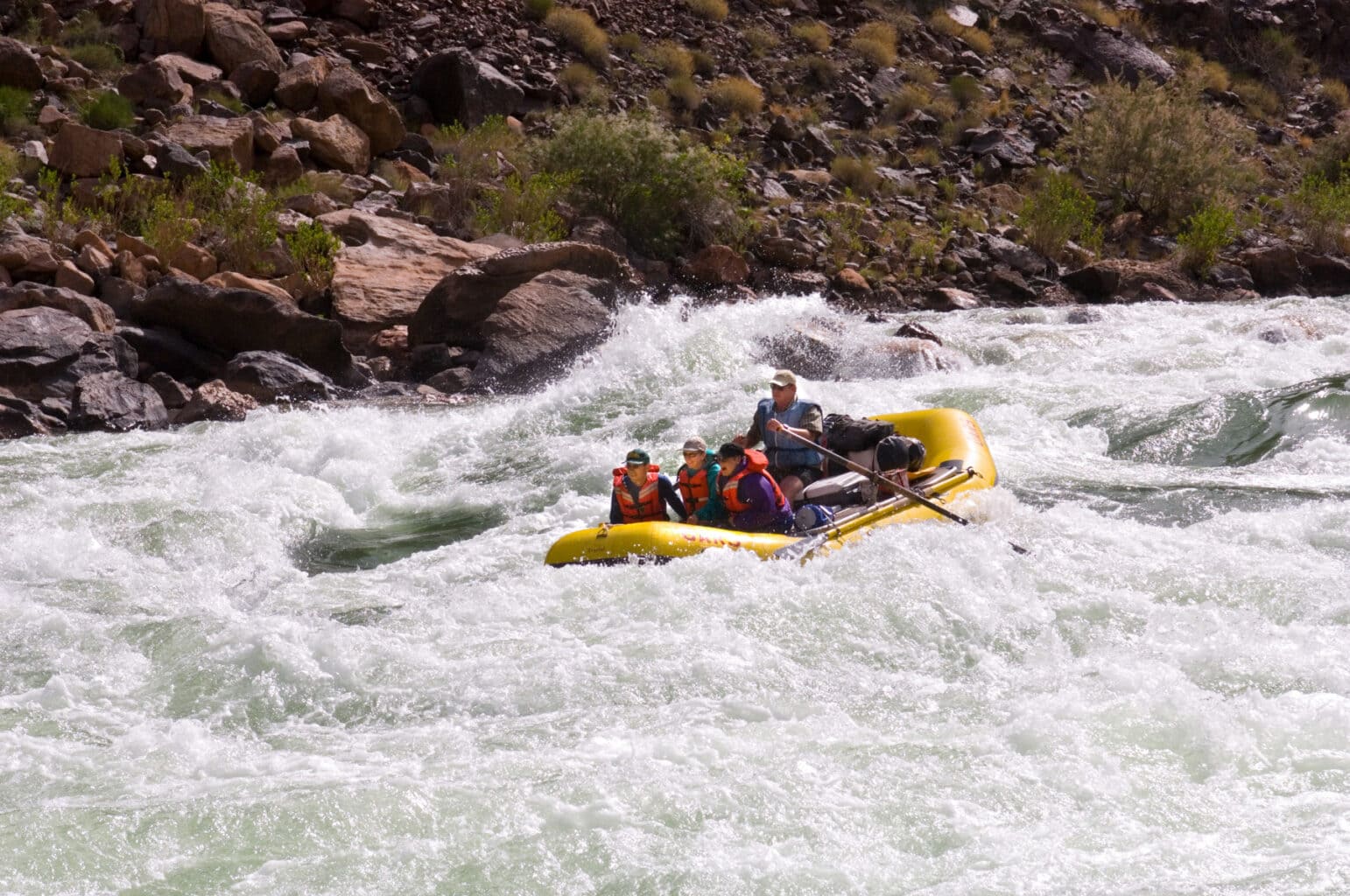
Skull is not a rapid to be taken lightly as it has been the site of some epic mishaps. While the move is relatively straightforward at intermediate flows, the consequences of a mistake can be severe (especially for rafts).
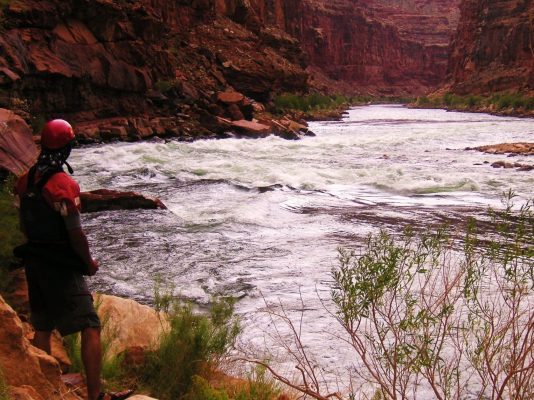
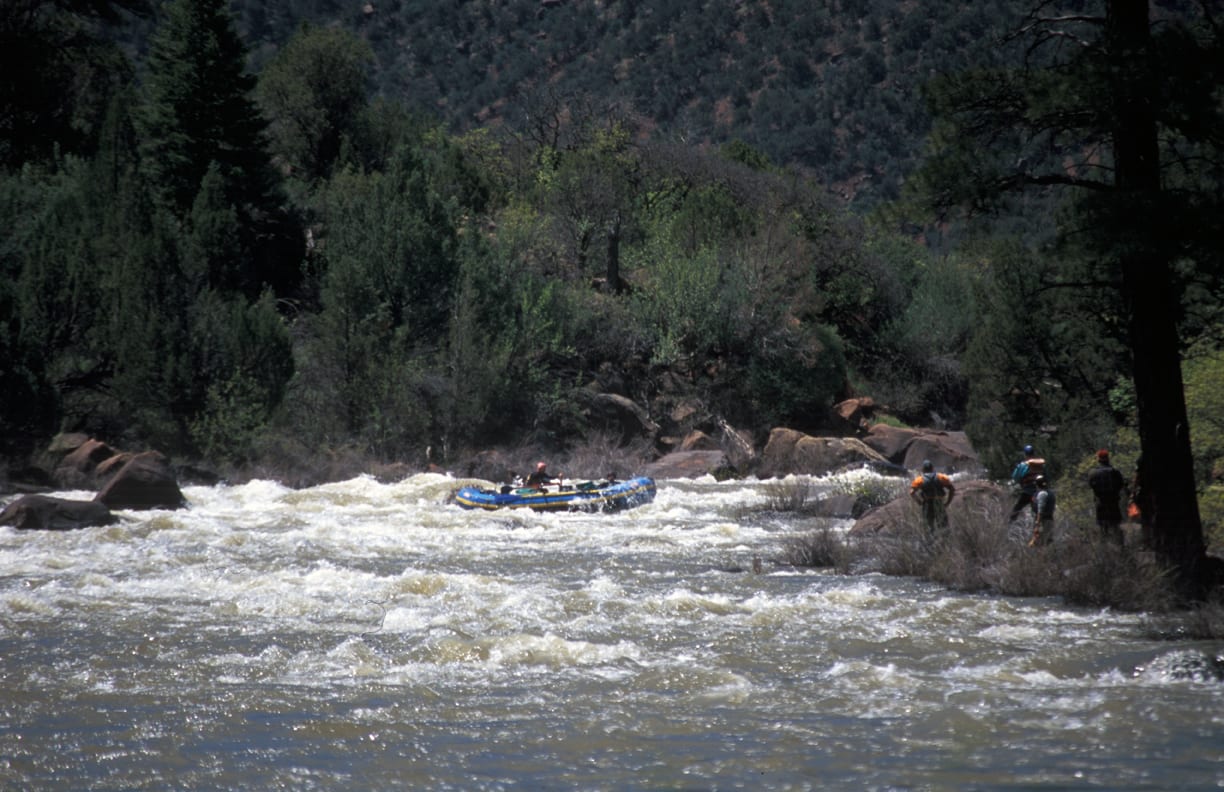
You'll recognize the rapid by a jumble of boulders that extends down to water level on river left, a steep wall on river right, and a distinct horizon line. The rapid can be scouted from the rocks on river left, but the scout eddy is small and immediately above the rapid, making it tough to peel out and line up correctly.
The key is to avoid Skull Hole (a definite raft flipper) and the Room of Doom below it on river right.
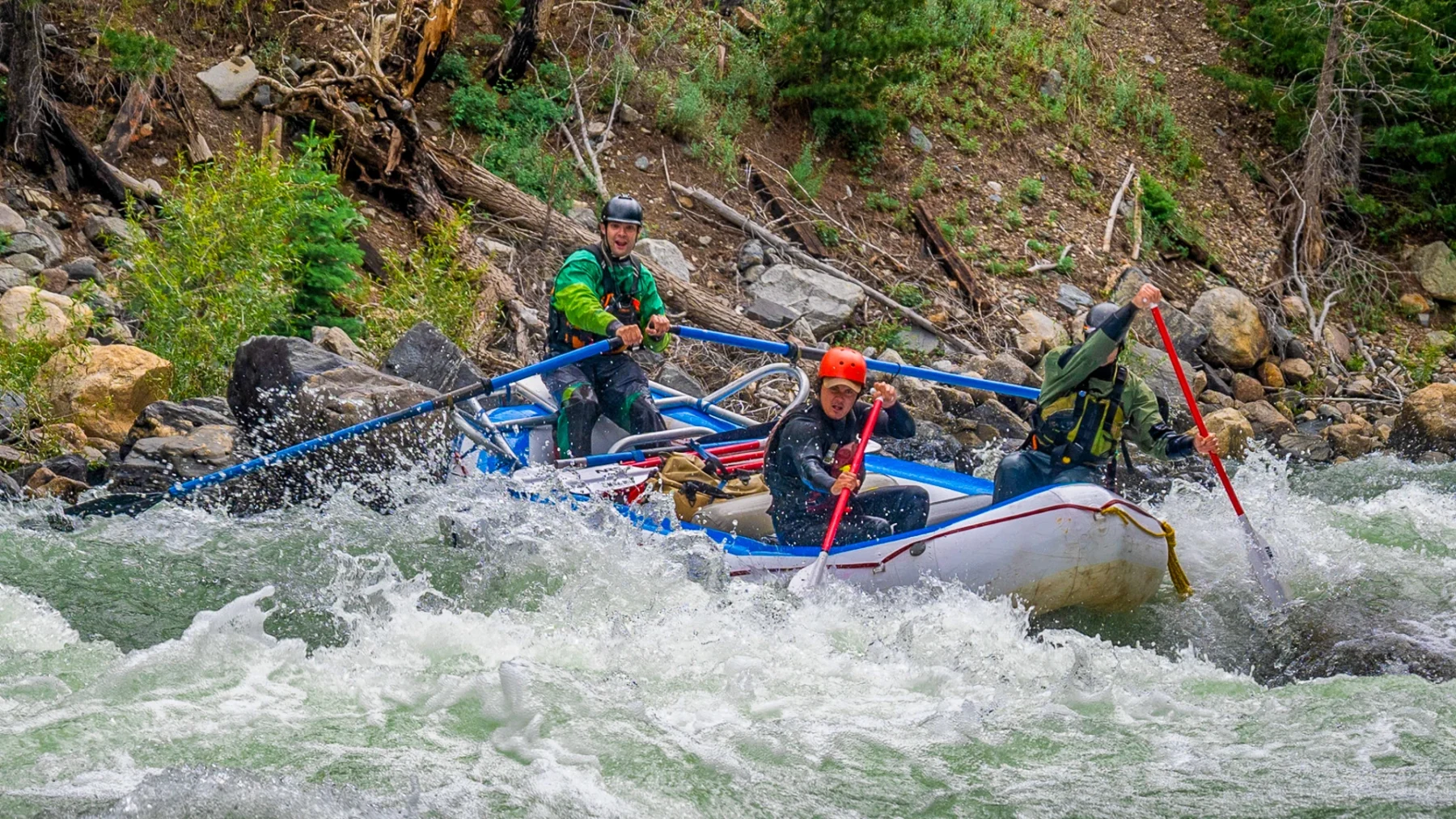
Breaking the left side of the entrance V-wave and continuing left works well at most water levels. In an oar raft, this works best as a downstream ferry starting center-right. In a paddle raft, this will require strong, carefully-timed forward strokes. In a kayak, it's splashy but not very technical. At flows below 2500 cfs, large rafts may need to consider other (wider) lines.
The Room of Doom is formed where a rock point protrudes out into the main current on river right. Most of the flow continues downstream to the left but a significant portion heads right into a rock alcove with a powerful recirculating current that prevents boats from accessing the main current. While you can potentially break the eddy fence, at flows much above 6000 cfs this becomes difficult for rafts (potentially fun for kayaks if you're looking for the experience of swirling around in a toilet bowl). There have been cases where groups have actually had to dismantle their raft and portage up over the cliff. This looks like it would be absolute hell.
Location
Other Rapids on This Run (20)
 Rapid
N/A
Rapid
N/A
 Rapid
N/A
Rapid
N/A
 Rapid
II
Rapid
II
 Rapid
N/A
Rapid
N/A
 Rapid
N/A
Rapid
N/A
 Rapid
N/A
Rapid
N/A
 Rapid
N/A
Rapid
N/A
 Rapid
N/A
Rapid
N/A
 Rapid
II+
Rapid
II+
 Rapid
N/A
Rapid
N/A
 Rapid
N/A
Rapid
N/A
 Rapid
III
Rapid
III
 Rapid
III
Rapid
III
 Rapid
III
Rapid
III
 Rapid
III
Rapid
III
 Rapid
III
Rapid
III
 Rapid
III
Rapid
III
 Rapid
III
Rapid
III
 Rapid
III
Rapid
III
 Rapid
N/A
Rapid
N/A
Current Conditions
5-Day Forecast
American Whitewater